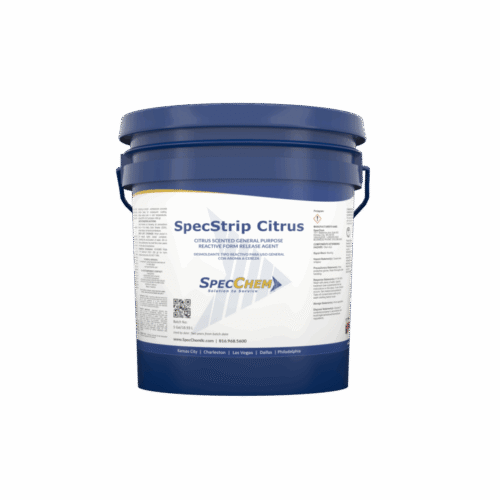
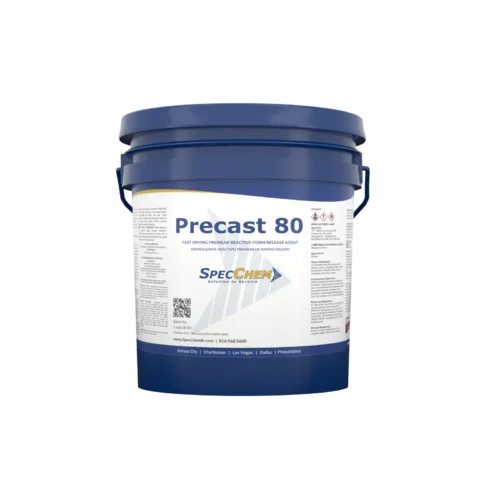
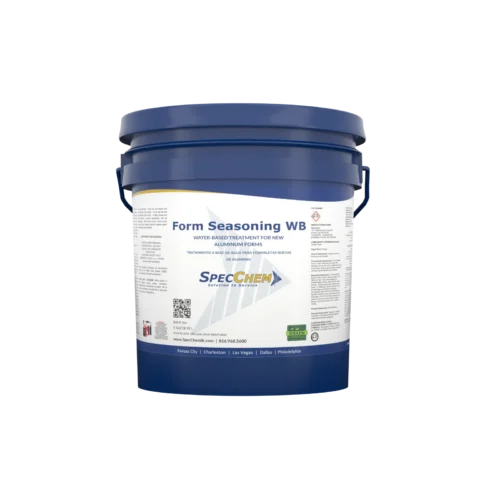
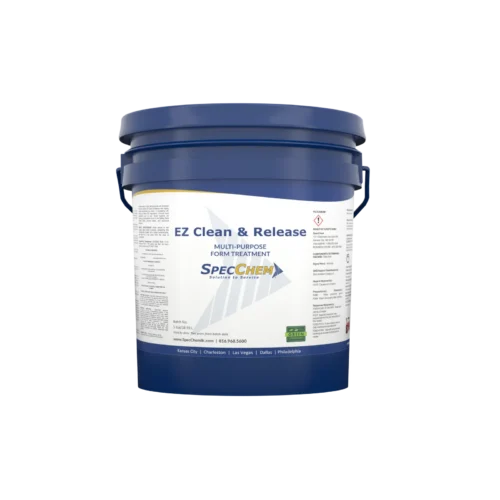
Form Release Agents & Treatments
What You Need To Know
Product Overview
SpecChem’s Form Release Agents are the key to achieving a clean and efficient release of concrete formwork. Our high-quality products provide excellent lubrication, allowing the concrete to easily separate from the forms. With our form release agents, you can say goodbye to residue, stains, and discoloration on the concrete surface. They are specially formulated to prevent bonding of the concrete to forms and liners, reducing the need for extensive cleaning. Trust SpecChem for reliable and effective form release agents that protect your formwork and ensure smooth concrete pours.
- High-quality form release agents and form treatment products for concrete construction
- Provides easy and clean release of concrete forms, reducing labor and time
- Prevents concrete adhesion to forms, ensuring smooth and consistent finishes
- Protects forms from damage and extends their lifespan
- Improves overall concrete surface appearance and quality
- Offers a range of options for different form types and project requirements
Explore The Lineup
Product Solutions
-
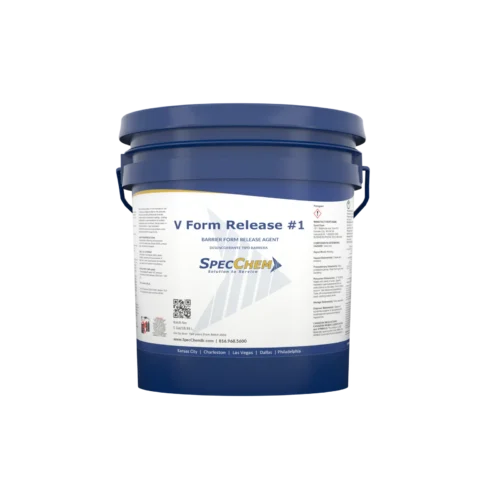
Barrier form release agent
-
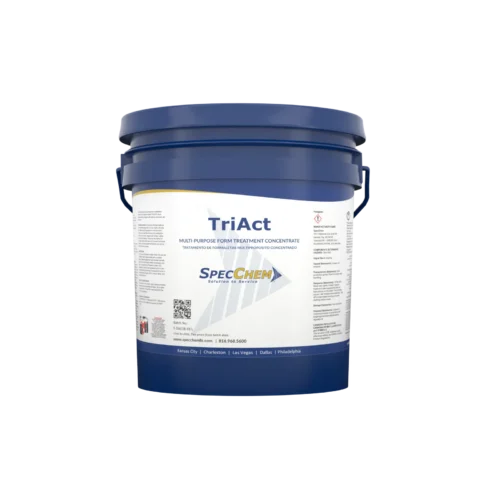
Multipurpose form treatment concentrate
-
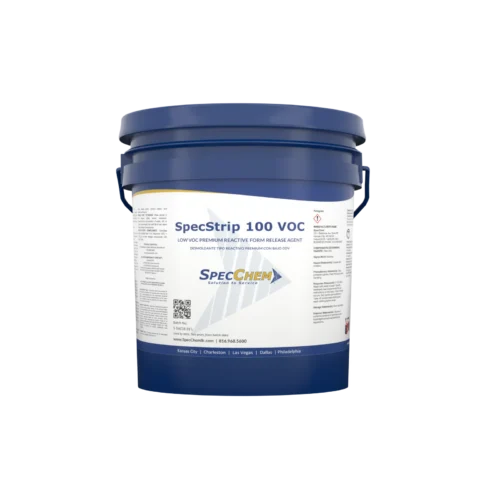
Low VOC premium reactive form release agent
-
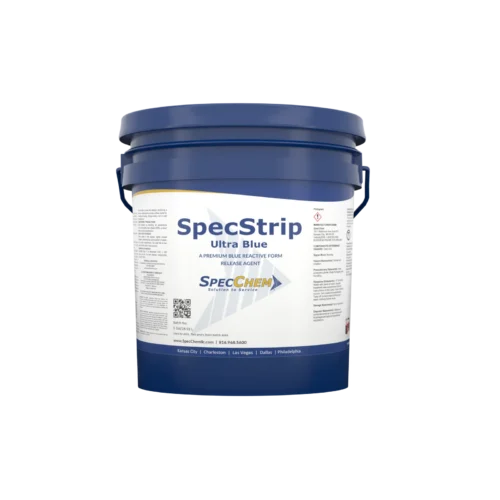
A premium blue reactive form release agent
-
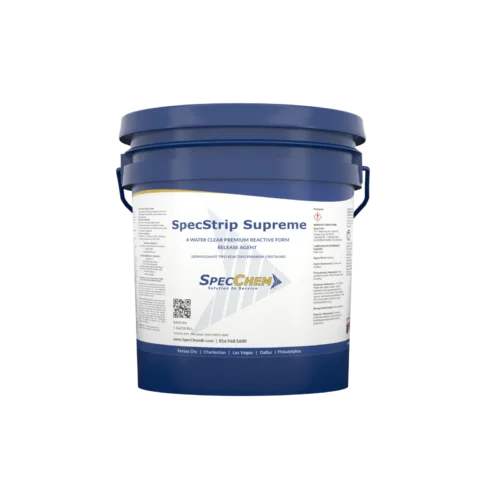
A water clear premium reactive form release agent
-
Reactive form release agent
-
Fast-drying premium reactive form release
-
Water-based treatment for new aluminum forms
-
Multi-purpose form treatment
-
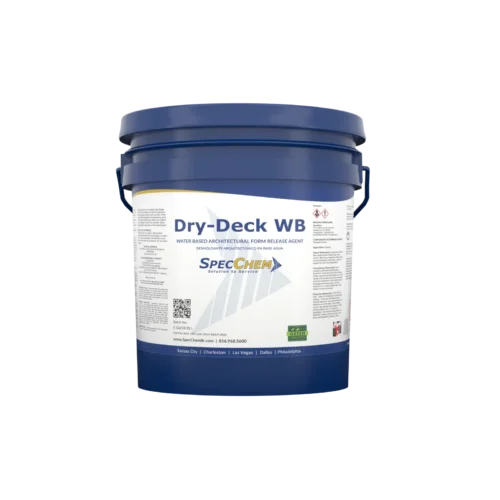
Water-based architectural form release agent
-
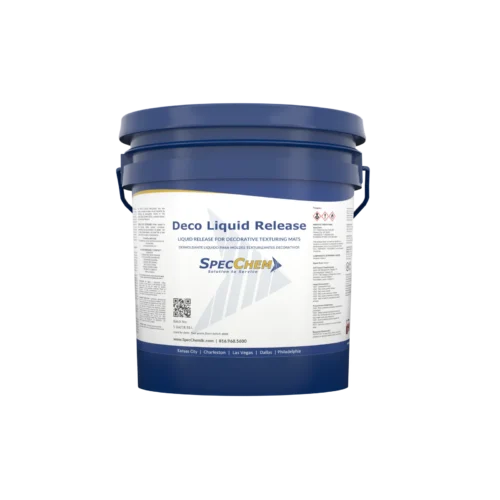
Liquid release for decorative texturing mats
-
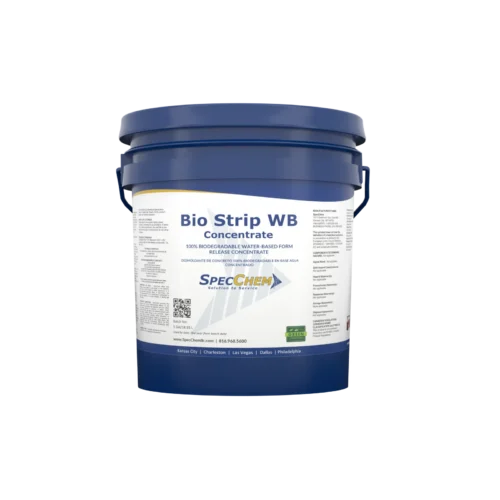
Biodegradable water-based form release concentrate
-
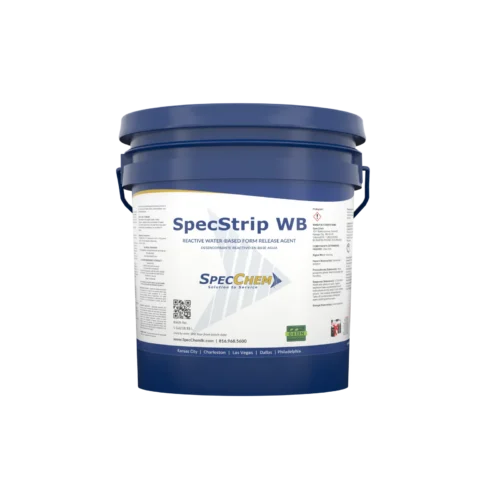
Reactive water-based form release agent
-
A premium reactive form release agent
-
Reactive form release agent
-
100% biodegradable water-based form release agent
Answers Made Simple
Frequently Asked Questions
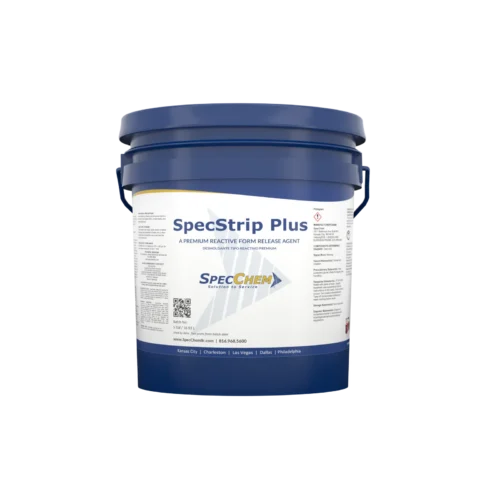
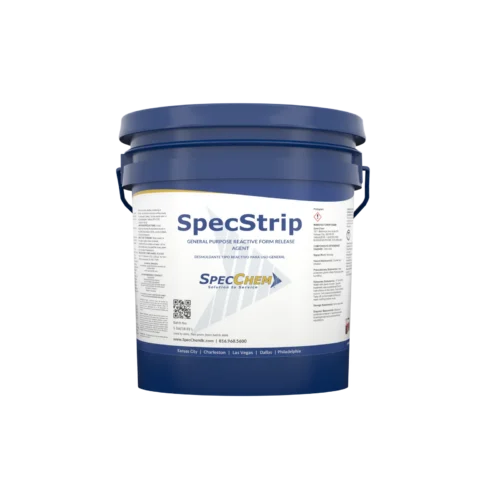
A concrete form release agent is applied to formwork before placement to prevent fresh concrete from bonding to the form. Chemically reactive products such as SpecStrip, SpecStrip Plus, and SpecStrip WB react with compounds in fresh concrete to create a microscopic release layer, supporting clean stripping without leaving stains or heavy residue.
Reactive release agents chemically interact with fresh concrete to form a release layer at the interface. Barrier products rely more heavily on a physical film between the concrete and form. Some products combine both mechanisms. SpecStrip and SpecStrip Plus are chemically reactive options, while V-Form Release #1 uses a mineral-oil-based reactive formulation without waxes or silicones.
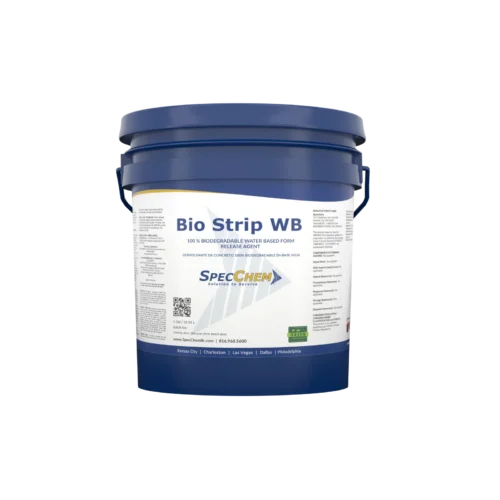
Water-based products generally provide lower odor, easier cleanup, and lower VOC content, but they may be more sensitive to freezing and cold-weather storage. Oil- or mineral-oil-based products can provide high coverage and dependable release across demanding applications. SpecStrip WB is a water-based reactive agent, Bio Strip WB is biodegradable and water-based, and SpecStrip and V-Form Release #1 are oil-based options.
Consider the form material, desired concrete finish, environmental requirements, application temperature, concrete mix, and whether the project involves cast-in-place, precast, architectural, or specialty formwork. Bio Strip WB is suited to environmentally sensitive locations, SpecStrip WB works across common forms and liners, Precast 80 is intended for precast and architectural work, and SpecStrip Plus provides premium reactive release performance.
Yes, but product compatibility and coverage vary by form material. SpecChem offers products for plywood, dimensional lumber, steel, aluminum, plastic, fiberglass, and various form liners. V-Form Release #1, for example, provides published application rates for steel, plastic, fiberglass, conditioned aluminum, plywood, and lumber. Always verify the selected product against the form material.
Forms should be clean, dry, sound, and free of rust, scale, hardened concrete, dirt, and incompatible release residue. New or heavily absorbent wood forms may require conditioning, while new aluminum forms may need a dedicated seasoning treatment. TriAct can be used as an aluminum-form seasoning agent as well as a release agent and maintenance treatment.
Apply a thin, uniform film at the coverage rate listed for the product and form material. Underapplication may leave areas where concrete sticks, while excessive material or puddling can contribute to dusting, discoloration, surface defects, or wasted product. V-Form Release #1 can cover up to approximately 2,000 sq ft per gallon on dense forms, with lower coverage on absorbent lumber and plywood.
A properly selected and evenly applied reactive release agent can support smoother surfaces, reduce bugholes and concrete buildup, and help prevent stains or discoloration. SpecStrip WB is specifically positioned to minimize bugholes, while Bio Strip WB leaves an architectural, bondable concrete surface. Overapplication, uneven spray, or incompatible products may negatively affect the finish.
Some release residues can affect the adhesion of later paints, coatings, adhesives, or architectural treatments. Chemically reactive, non-staining products that leave a bondable surface are preferable when the concrete will receive another finish. Bio Strip WB is specifically described as leaving a bondable architectural surface, but compatibility should still be confirmed through the product data and a test area.
Yes. Proper form release can reduce adhesion and hardened concrete accumulation, which lowers cleaning demands and helps protect forms from damage during stripping. V-Form Release #1 reduces buildup and protects forms against rust, while TriAct can soften existing concrete buildup and serve as a maintenance coating. Nox-Crete also identifies longer form life as a benefit of chemically active release agents.
Learn by Watching
Product Videos
Articles & Blog Posts
SpecPros Content
The Ultimate Cheat Sheet: SpecChem’s Form Release Agents & Treatments – Features, Applications, and Expert Tips
Expert Resources & Tools SpecPros Blog The Ultimate Cheat Sheet: SpecChem’s Form Release Agents & Treatments – Features, Applications,…Choosing the Right Form Release Agent: From Residential to Commercial
Expert Resources & Tools SpecPros Blog Choosing the Right Form Release Agent: From Residential to Commercial One of the…Understanding the Science Behind SpecChem’s Reactive Form Release Agents
Expert Resources & Tools SpecPros Blog Understanding the Science Behind SpecChem’s Reactive Form Release Agents In my nearly three…5 Step Guide to Applying a Form Release Agent
Expert Resources & Tools SpecPros Blog 5 Step Guide to Applying a Form Release Agent Step 1: Preparing the…7 Properties of a Good Form Release Agent
Expert Resources & Tools SpecPros Blog 7 Properties of a Good Form Release Agent A good form release agent…3 Reasons Form Release Agents are Used in Concrete Construction
Expert Resources & Tools SpecPros Blog 3 Reasons Form Release Agents are Used in Concrete Construction Form release agents…
Subscribe to SpecPros
Get our industry-leading expert content right in your inbox