Product Resource Page

Dry Shake Hardeners & Toppings

What You Need To Know

Product Overview


SpecChem’s Dry Shake Hardeners & Toppings are the perfect solution for enhancing and protecting your concrete surfaces. Whether you’re looking to add durability and abrasion resistance to industrial floors or create a decorative finish for commercial spaces, our high-quality products have got you covered. With a wide range of colors and finishes to choose from, you can achieve the look and performance you desire. Trust SpecChem for all your dry shake hardener and topping needs and experience the difference in quality and reliability.

  • Reduces moisture loss during the concrete curing process
  • Reduces dusting and improves abrasion resistance
  • Provides a denser and more durable surface
  • Offers long-lasting protection against wear and tear
  • Easy to apply and compatible with various concrete mixes
  • Improves overall surface appearance and quality

Explore The Lineup

Product Solutions

Answers Made Simple

Frequently Asked Questions


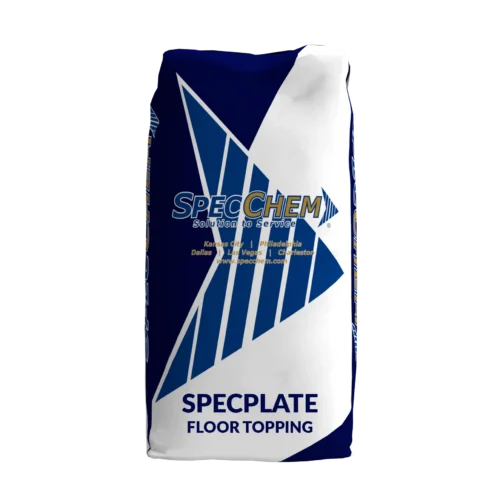
A dry-shake hardener is a powdered cementitious material broadcast onto fresh concrete and worked into the surface during finishing. Quartz Floor Hardener, SpecPlate Hardener, and SpecPlate NOX are installed this way. SpecPlate Floor Topping is mixed with water and placed over a tacky epoxy bond coat at a specified thickness, making it suitable for heavy-duty resurfacing of new or existing floors.

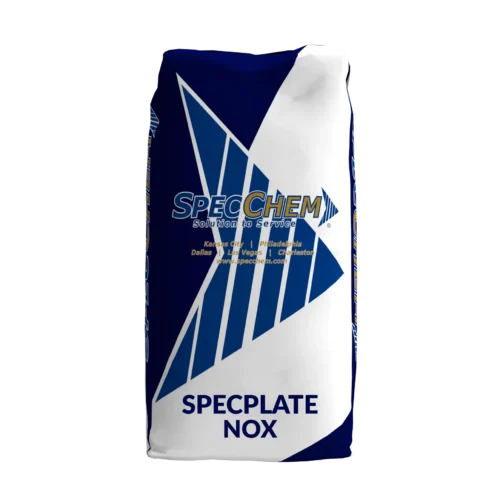
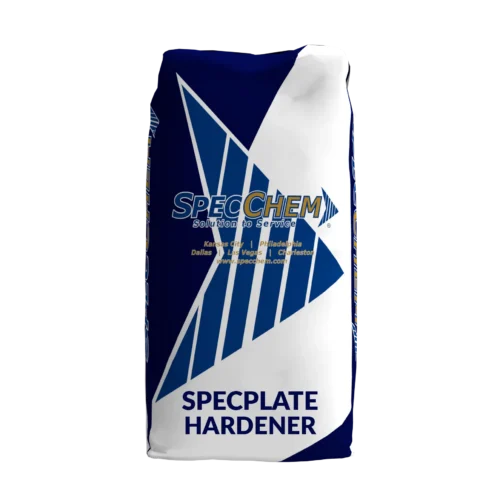
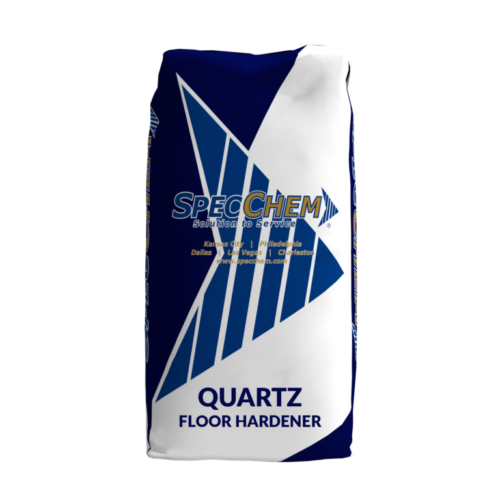
Nonmetallic products such as Quartz Floor Hardener use graded quartz aggregate and can be used on interior or exterior floors without rust concerns. SpecPlate Hardener uses metallic aggregate for maximum abrasion, impact, and point-load resistance on demanding interior floors. SpecPlate NOX provides metallic-level performance with nonoxidizing aggregate for areas exposed to frequent moisture or water. Competitors similarly organize their ranges around natural, metallic, and nonoxidizing metallic aggregates.

Consider traffic type, impact and point loading, moisture exposure, interior or exterior use, desired color, and whether the slab is fresh or existing. Quartz Floor Hardener is a cost-effective, nonrusting choice for general wear. SpecPlate Hardener is intended for severe industrial traffic, while SpecPlate NOX is better where high wear and moisture exposure occur together. SpecPlate Floor Topping is designed for heavy-duty bonded topping applications.

Application should begin after the slab has been screeded, floated, and most bleed water has disappeared, but while enough surface moisture remains to wet the hardener and bond it monolithically to the concrete. SpecChem generally recommends applying about two-thirds of the material first, floating it in after it darkens, and then applying the remaining third.

Application rate depends on the product, traffic severity, desired color, and project specification. SpecPlate Hardener is generally applied at approximately 1.5 to 2.5 pounds per square foot. Competitive products also vary their rates based on required wear resistance, with heavier rates used for more demanding floors.

The concrete must provide enough surface moisture for the dry shake to wet out without adding water during finishing. Slump, air content, admixtures, fibers, setting time, and bleed characteristics can all affect application. SpecChem directs installers to account for slump, environmental conditions, and coverage rate.

Yes, when the correct aggregate type is selected. Quartz Floor Hardener is nonmetallic and nonrusting, while SpecPlate NOX uses nonoxidizing metallic aggregate for high-wear floors exposed to frequent moisture and water. Standard SpecPlate Hardener is intended primarily for demanding interior floors and should be selected with the service environment in mind.

Wind, direct sunlight, low humidity, and high temperatures can cause rapid surface drying and reduce the moisture available to wet out the hardener. Cool conditions can delay bleeding and setting. SpecFilm or IntraFilm can be lightly applied during finishing to reduce rapid moisture loss without adding water to the concrete.

Common causes include applying before bleed water has cleared, waiting until the surface is too dry, applying material unevenly, adding water during finishing, overworking the surface, poor concrete consolidation, or inadequate curing. SpecChem specifically warns against adding water because it can weaken the finished surface.

After final finishing, apply an approved curing compound at the specified coverage rate. SpecChem directs installers to use an ASTM C309-compliant curing compound with SpecPlate Hardener. A bonded topping such as SpecPlate Floor Topping follows a different curing procedure and requires water misting and polyethylene covering for at least seven days.

Learn by Watching

Product Videos


Articles & Blog Posts

SpecPros Content


Subscribe to SpecPros

Get our industry-leading expert content right in your inbox